If you’re weighing student-centered vs teacher-centered learning, start here: the difference is who makes the choices. Teachers decide in one model; students share those decisions in the other.
This comparison sits inside the wider topic of student-centered learning, which covers the ideas behind the approach in more depth.
| Item | Value |
|---|---|
| Who chooses the content in a teacher-centered classroom | The teacher |
| Who chooses the content in a student-centered classroom | Students |
| Teacher’s main role in a teacher-centered classroom | Primary source of knowledge |
| Teacher’s role in a student-centered classroom | Facilitator |
| Assessment emphasis in student-centered learning | More formative, less summative |
| Learning theory behind student-centered learning | Constructivism |
These points come from Wikipedia’s overview of student-centered learning. Descriptions of educational approaches can change, so check the source before you rely on them.
How the two models divide the decisions
In a teacher-centered classroom, teachers choose what the students will learn, how they will learn it and how they will be assessed. Teachers are the primary source of knowledge, and students take a more “passive”, receptive role.
In a student-centered classroom, students hold more of those decisions. They choose what they will learn and how they will pace their learning, and they take part in assessing it. The approach requires students to be active, responsible participants in their own learning.
The approach is also known as learner-centered education. It broadly covers teaching methods that shift the focus of instruction from the teacher to the student.
Put simply, the two models split three decisions differently:
- Content: the teacher picks it in one model, students pick it in the other.
- Method and pace: the teacher sets them in one model, students help set them in the other.
- Assessment: the teacher judges in one model, students join the evaluation in the other.
What changes for the teacher and the student
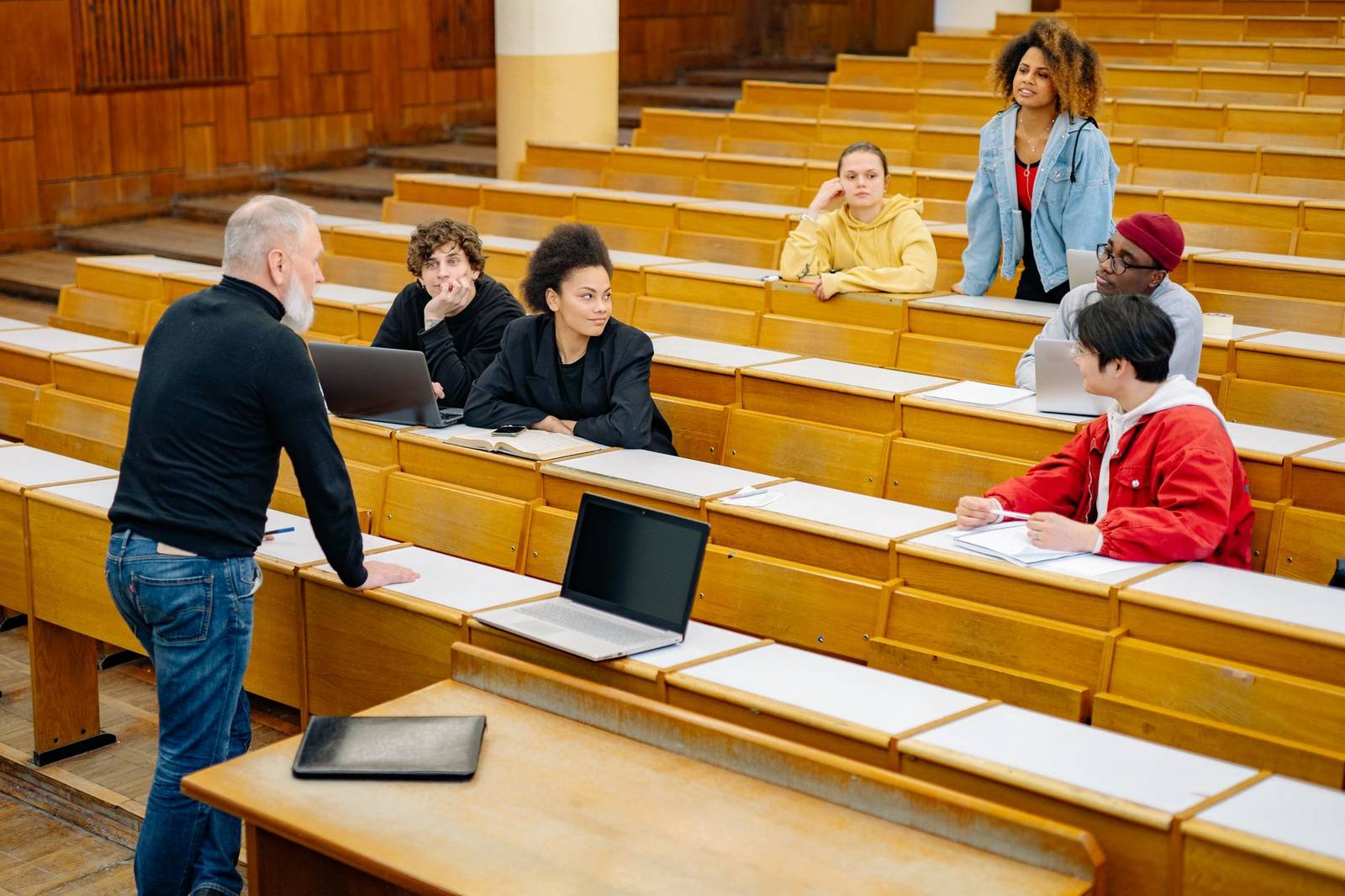
The clearest shift is the teacher’s role. In a student-centered classroom the teacher acts as a facilitator, as opposed to an instructor. The teacher’s goal is to guide students into making new interpretations of the learning material.
The wording also matters when the term is used loosely. It can refer to mindsets or methods that recognize individual differences in learners. In that sense, it emphasizes each student’s interests, abilities and learning styles, with the teacher facilitating learning for individuals rather than for the class as a whole.
Classmates play a part too. Through peer-to-peer interaction, collaborative thinking can lead to an abundance of knowledge. In Lev Vygotsky’s zone of proximal development, students typically learn vicariously through one another, and scaffolding is important when fostering independent thinking skills.
Why assessment is the sharpest contrast
The source describes assessment as one of the most critical differences between the two models. Student-centered learning typically involves more formative assessment and less summative assessment than teacher-centered learning.
Students also take part in evaluating their own learning. That means they are involved in deciding how to demonstrate it.
This has a practical consequence. Developing assessment that supports learning and motivation is essential to the success of student-centered approaches, so changing who teaches without changing how learning is checked leaves the model half built.
Where the student-centered idea comes from
The shift is rooted in theory rather than fashion. Theorists such as John Dewey, Jean Piaget and Lev Vygotsky, whose collective work focused on how students learn, have informed the move toward student-centered learning.
- Dewey advocated progressive education and believed learning is a social, experiential process in which children learn by doing.
- Carl Rogers contributed ideas about the formation of the individual that fed into the approach.
- Maria Montessori was a forerunner of student-centred learning, applying child-centred methods in schools for young children.
Student-centred theory and practice are based on constructivist learning theory, which emphasises the learner’s critical role in constructing meaning from new information and prior experience. Self-determination theory adds a motivation angle: placing students at the center of the classroom allows them to gauge their own self-worth, which creates a higher degree of intrinsic motivation.
What the evidence says and how to use the comparison
The source reports some positive findings. In the U.S., the principles of student-centered instruction have been promoted as a way to improve engagement and boost achievement through their inclusion in the Common Core. Student-centered instruction has been shown to be related to increased mathematics engagement, and student-centered learning environments have been shown to be effective in higher education.
Those are summaries, so read the studies behind them before treating any result as settled. For concrete classroom scenarios, browse these student-centered learning examples. For a fuller picture of what the approach is meant to deliver, read about the benefits of student-centered learning.
When you look at any lesson, three questions help you place it on the spectrum:
- Who decided what is being learned?
- Who is doing the active work during the lesson?
- Who decides how learning is shown and judged?
Frequently asked questions
Is student-centered learning the same as learner-centered education?
Show answer
Yes. The source says student-centered learning is also known as learner-centered education.
Who decides what is taught in each model?
Show answer
In a teacher-centered classroom, teachers choose what students will learn. In a student-centered learning space, students choose what they will learn.
Does the teacher matter less in a student-centered classroom?
Show answer
The role changes rather than shrinks. The teacher acts as a facilitator instead of an instructor, and scaffolding is important when fostering independent thinking skills.
How does assessment differ?
Show answer
Student-centered learning typically involves more formative and less summative assessment, and students take part in evaluating their own learning.