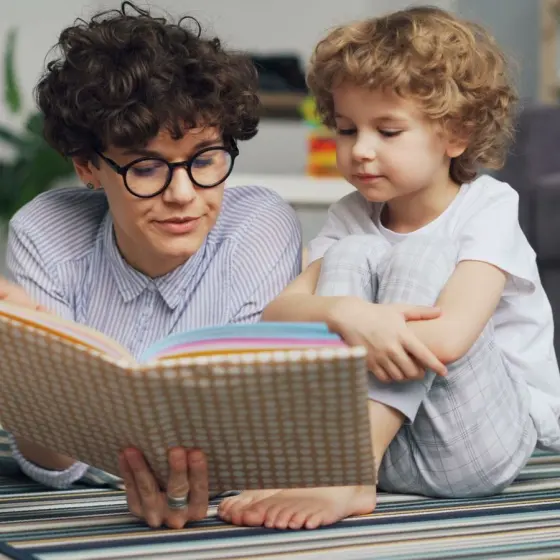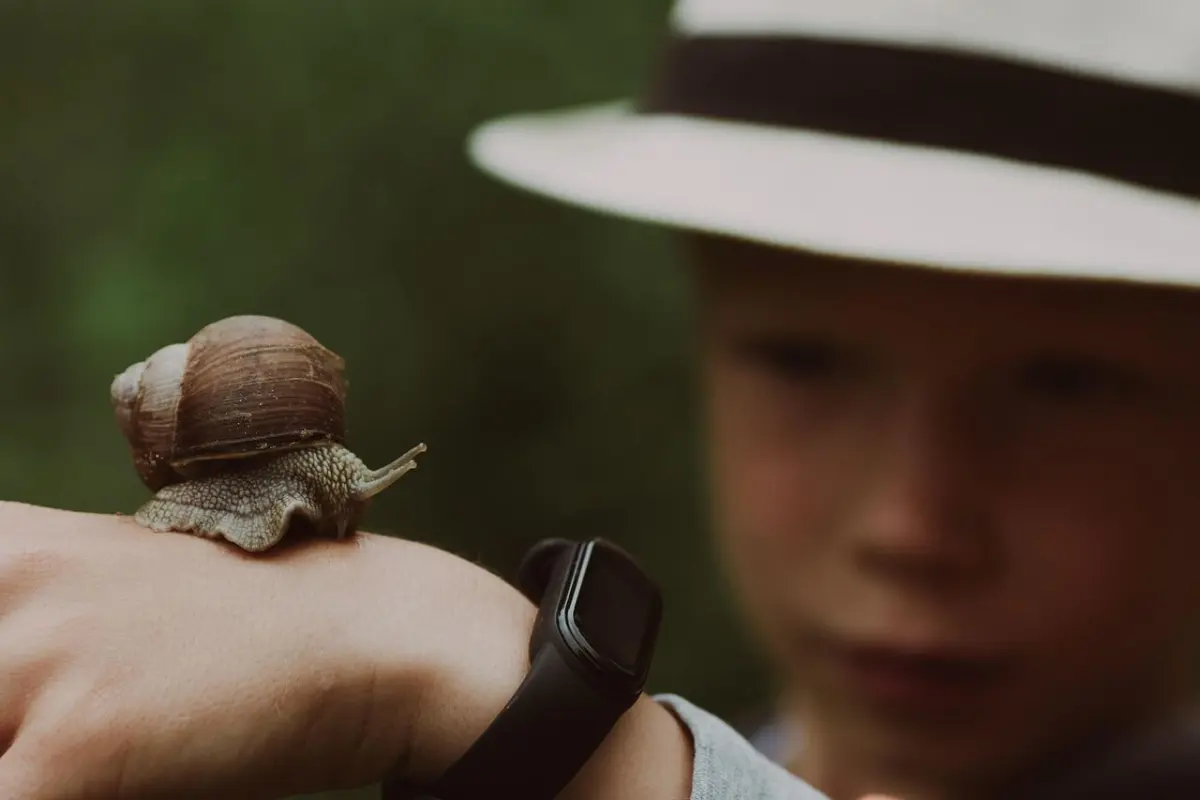
Wondering how to encourage curiosity in children without turning every question into a lesson? Answer their questions satisfyingly, show your own curiosity, and create small moments of surprise. Children arrive curious; your job is to keep that going.
This guide sits within our wider look at how to support your child’s learning at home.
| Key fact | Value |
|---|---|
| Age at which children can spot a mismatch between a prediction and what happens | As young as 4 years old |
| Age by which children inquire all day long | 18 months |
| Questions asked by most children aged 3 or 4 | About one question a minute |
| Questions asked by the least inquisitive children | One every two or three minutes |
| Things parents can do to encourage curiosity, per one researcher | At least three |
These figures come from Harvard Graduate School of Education’s Usable Knowledge and the Child and Family Blog. Research summaries can change, so check the sources before you rely on them.
Why children are curious before you do anything
Cognitive scientist Elizabeth Bonawitz describes curiosity as innate in all humans, a sensation much like hunger or thirst. In a November 2020 Harvard piece, she explains that it works as a filter that helps the mind decide what information deserves attention.
Developmental researcher Susan Engel makes a similar point in a July 2019 article. By 18 months, she writes, children are voracious in their pursuit of information, and most children aged 3 or 4 ask about one question a minute.
That is good news for you. You are not building curiosity from nothing; you are trying to avoid dampening something that is already there.
It is also worth knowing why it matters beyond school. Engel notes that people who rate high on curiosity scales also report higher satisfaction with their lives and higher well-being, possibly because people who keep learning tend to be happier.
Three habits that keep questions coming
Engel says parents can do at least three things. Each one is simple, and each one changes what happens after your child asks “why?”
- Give satisfying answers. Children’s questions respond to the answers they get: a good answer leads to deeper, more refined questions, while an unsatisfying one means the child repeats the question and may eventually stop asking.
- Show your own curiosity. Ask questions, look things up and investigate out loud. Children who ask many questions typically have parents who do the same.
- Follow questions into the unknown. Enjoy not knowing something, and treat finding out as a shared project.
Engel’s ice example shows the third habit at work. A child asks why ice melts, and instead of stopping at a correct answer, you might say, “Let’s use a timer and see how long the ice takes to melt.”
Following a question like this also gives your child practice in working things out alone, a skill we cover in how to build independence in kids.
How to spark curious moments
Bonawitz offers a useful correction: she says there is no scientific evidence that you can foster curiosity as a trait. What you can do is create situations that prompt and guide a child’s curiosity, since parents and educators can shape the specific contexts that provoke it.
Two ideas from the Harvard piece are easy to try at home:
- Highlight ambiguity. Children as young as 4 can notice when a prediction and an actual outcome do not match, and that gap sparks curiosity automatically.
- Help children notice gaps in what they know. When children feel their explanation is insufficient, they seek out more information.
- Ask prediction questions. Bonawitz calls these tailored questions pedagogical questions: they ask a child to predict, which brings out existing beliefs and makes a mismatch easier to see.
For example, before dropping two objects into water, ask your child which one will sink. If the result surprises them, you do not need to explain straight away; the surprise is doing the work.
What can quietly shut curiosity down
Adults often discourage curiosity without meaning to. Engel points out that answering a question with another question, such as “Why do you think the ice melts?”, can be fun but sometimes becomes too didactic.
She adds that the Socratic method, where an adult leads a child toward a particular answer, is not necessarily the best approach. Her chicken example: when a child asks why chickens go in at night, a direct answer about coyotes both satisfies the child and opens up new questions about coyotes.
An uninterested response matters too. According to Engel, the least curious children are the ones most vulnerable to a blank stare from an adult, so they are the ones who most need encouragement to inquire.
School is the other pressure point. Engel writes that children may lose curiosity as they grow older or in certain contexts, notably at school, so it is worth watching how your child talks about learning there. If schoolwork is where the spark fades, how to reduce homework stress may help you ease the pressure at home.
One more caution comes from Harvard. Bonawitz argues that most ways of assessing curiosity do not measure curiosity itself, because they look at actions rather than what is happening inside a child’s mind. A quiet child may be just as curious as a chatty one.
Everyday ways to practise curiosity
You do not need special equipment. A May 2018 New York Metro Parents article, citing a Wakefield Research survey carried out with a children’s brand, reports that approximately 94 percent of parents believe the more curious kids are, the more successful they will be as adults. Treat that as a snapshot of parental opinion, not proof of an outcome. You can read it at New York Metro Parents.
The same article suggests a few practical starting points:
- Play: stacking or building things, playing pretend and other imaginative play.
- Art: approximately 75 percent of surveyed parents say painting, drawing and making art is one of the best ways for a child to explore and express curiosity.
- Reading: the article calls it one of the most valuable ways to help language develop, and says it encourages an active imagination.
Whichever you choose, pair it with the habits above. A trip to the library works best when you follow your child’s question about a book rather than steering them to the “right” one.
Frequently asked questions
Can you make a child more curious?
Show answer
Bonawitz says there is no scientific evidence that curiosity can be fostered as a trait. Her suggestion is to focus on creating moments that provoke a curious response, such as highlighting a surprise or asking for a prediction.
Is it normal for my child to ask so many questions?
Show answer
Yes. Engel reports that most children aged 3 or 4 ask about one question a minute, and even the least inquisitive ask one every two or three minutes. You can model good habits by looking things up together when you do not know the answer.
What if my child has stopped asking questions?
Show answer
Engel notes that when answers are unsatisfying, children may stop asking over time. Try giving more direct answers, sharing questions of your own, and showing real interest when they do ask.
Does a quiet child lack curiosity?
Show answer
Not necessarily. Bonawitz cautions that common measures of curiosity look at a child’s actions rather than their inner state, so you cannot tell what is happening in a child’s mind from outward behaviour alone.