
If homework nights end in tears, you’re not alone. Here’s how to reduce homework stress: set a steady routine, keep the workload age-appropriate, take breaks, protect sleep, and step back when your child can manage alone.
For wider context, read our guide on how to support your child’s learning at home.
| Item | Value |
|---|---|
| Rule of thumb for primary-age homework | 10 minutes per year group level |
| Year 1 maximum | 10 minutes |
| Year 2 maximum | 20 minutes |
| Middle school: benefits begin to decline after | 90 minutes |
| High school: counterproductive beyond | two and one half hours |
These figures come from Doodle Learning’s July 2024 guide and a NOLA Family Magazine article from April 2016. They are general guidelines and can change, so check the source before you rely on them.
Why homework becomes a family stress point
Doodle Learning’s guide answers the basic question plainly: too much homework can cause stress and anxiety for students and for their parents. It adds that findings on the benefits of homework at primary level are mixed, with positive effects appearing only under certain conditions for certain groups of students.
Older students feel it too. In its own Student Life in America survey, The Princeton Review reported that over 50% of students felt stressed and 25% said homework was their biggest source of stress. Because it is one company’s survey, treat it as a single data point rather than a national measure.
The same page notes that a Stanford researcher found more than two hours of homework a night may be counterproductive, in a study of 10 high-performing high schools in California. It also points to the 2014 Brown Center Report, which found that, apart from nine-year-olds, the amount of homework schools assign has stayed relatively unchanged since 1984.
Part of the strain is not the amount but the struggle. In that survey, 64% of students said their parents couldn’t help them with their work, which leaves many families stuck at the kitchen table.
How much homework is reasonable?
The most quoted yardstick is Harris M. Cooper’s 10-minute rule. Doodle describes it as limiting homework to 10 minutes per year group level, so a child in Year 1 does no more than 10 minutes and a child in Year 2 no more than 20 minutes.
The DreamBox guide, published in Oct 2024, states the same limit as 10 minutes per grade level. It says the National Parent Teacher Association and the National Education Association both endorse this guideline as a general rule of thumb.
The NOLA Family article from April 2016 applies the same idea by grade, multiplying 10 minutes by the child’s grade. It gives rough limits for older students as well:
- Before first grade, homework is not recommended.
- For elementary students, the 10-minute rule can guide the amount set.
- For middle school students, the benefits begin to decline after 90 minutes.
- For high school students, anything beyond two and one half hours becomes counterproductive.
The NOLA Family piece also says too much homework has a negative effect on health, through sleep deprivation, and on emotional well-being. You may not control how much is set, but these numbers give you a reasonable point at which to say “enough” or to raise it with the teacher.
Build a routine and a space that lower the temperature
A predictable routine removes much of the arguing. The Princeton Review says that knowing in general when and where homework will happen removes half the battle, because the “when should I start?” decision has already been made.
Doodle suggests posting a weekly schedule somewhere visible, including homework time, and going through it with your child. Routines still need to bend around sports, tutoring or music lessons, so a weekly check-in works better than a fixed rule.
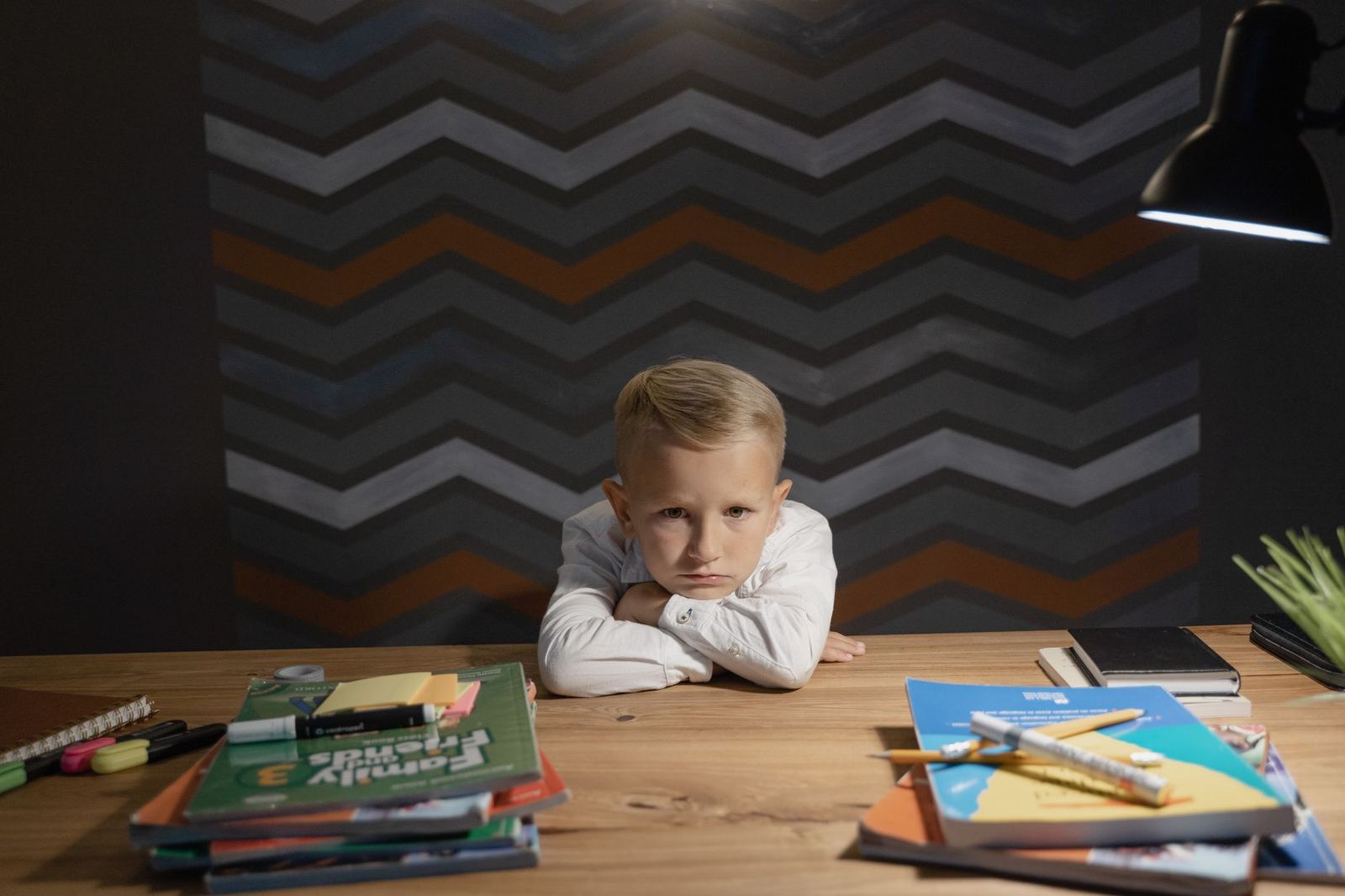
A few small setup choices make a difference:
- Pick a spot and keep it tidy. Doodle says it doesn’t matter whether that is a desk, a dining room table or a kitchen countertop, but an unorganised area is very distracting.
- Start early. Doodle notes that children are naturally more tired later in the evening, which can lead to more stress.
- Plan the week. The Princeton Review suggests spreading test preparation across several evenings so the night before does not loom.
- Protect sleep. DreamBox, citing the American Academy of Sleep Medicine, says kids aged 6-12 should get at least 9 hours of sleep each night.
What to do when your child is stuck or melting down
When frustration builds, the aim is to stop the spiral rather than to finish the worksheet. These steps follow the advice in the sources:
- Acknowledge the frustration first, without fixing anything.
- Suggest a short brain break. Doodle says a break gives your child a chance to step away from a frustrating problem and come back later.
- Offer a growth-mindset phrase. DreamBox suggests moving from “I can’t do this” to “I may not understand this yet, but I will figure it out.”
- If it is still too much, stop. Doodle says it really is okay to stop, and that children can write a list of questions and ask their teacher for help the next day.
- Contact the teacher if it keeps happening. Doodle says parents should never feel afraid to talk to their child’s teacher about homework issues.
Celebrate small things, too. The Princeton Review says reviewing finished work together at the end of the night, and acknowledging even small wins, helps build a sense of accomplishment.
A homework group a few times a week is another option. DreamBox says working together encourages collaboration, and discussing the work can solidify concepts learned in class.
How involved should you be?
Less than most parents expect. The NOLA Family article says leaving children alone at homework time may be the best thing you can do, and that the most effective way to build independence is to let students do their own work.
It recommends a few light-touch habits: set a time guideline with a timer, allow natural consequences, limit distractions at home, and resist the urge to proof and correct. It also suggests talking about what your child is learning in a relaxed way, which is where how to encourage curiosity in children can help keep learning feeling like more than a chore.
The Princeton Review adds that kids often do better with help from someone other than a parent, and that a war ends when one person disengages. If homework loads keep overwhelming your child despite these steps, it can inform the questions you ask when you look at how to choose a school for your child.
Frequently asked questions
Does homework really cause stress?
Show answer
Doodle Learning’s July 2024 guide says yes: it has been well documented that too much homework can cause stress and anxiety for students and their parents. It also says the benefits at primary level are mixed.
How long should homework take?
Show answer
A common rule of thumb is 10 minutes per year group level, so Year 1 is about 10 minutes and Year 2 about 20. The NOLA Family article (April 2016) says middle school benefits decline after 90 minutes.
Should I check and correct my child’s homework?
Show answer
The NOLA Family article advises resisting the urge to proof and correct work. Letting your child do it themselves builds independence, and natural consequences can teach more than a parent’s edits.
What if my child is too upset to continue?
Show answer
Stop and take a break. Doodle says it is okay to stop altogether, then have your child list questions and ask the teacher for help the next day.
How much sleep does a school-age child need?
Show answer
DreamBox’s October 2024 guide, citing the American Academy of Sleep Medicine, says kids aged 6-12 should get at least 9 hours each night. Tired children concentrate less well, which can make homework feel more overwhelming.