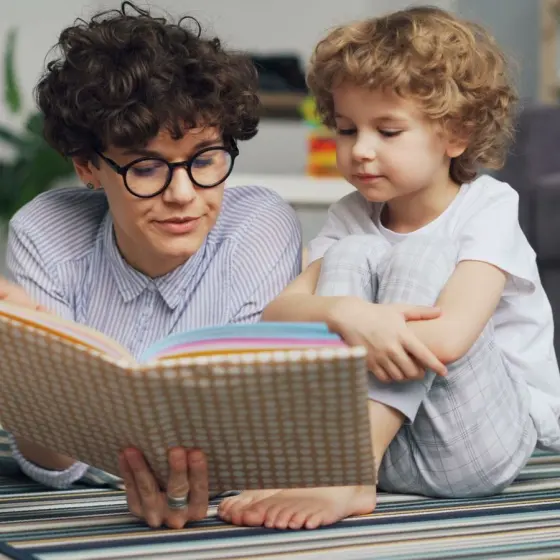
If you’re wondering how to motivate a child to learn, start with three needs: feeling capable, having some say, and feeling cared for. Self-determination research links these to intrinsic motivation.
This guide is part of our series on how to support your child’s learning at home.
| Item | Value |
|---|---|
| Study sample | 331 school students |
| Grade range | 5th to 12th grade |
| Setting | One traditional school in Cluj-Napoca, Romania |
| Basic psychological needs for intrinsic motivation | Three: competence, autonomy and relatedness |
| Publication year | 2023 (EDULEARN23 Proceedings) |
The figures come from a conference paper abstract in the IATED Digital Library. Research details can change or be refined, so check the source before you rely on them.
What the research says about motivation
Motivation is not an on-off switch. The founders of Self-Determination Theory, R. Ryan and E. Deci, ranked it on a continuum from amotivation, to intrinsic motivation and external motivation.
A child who resists learning may sit anywhere on that line. Some children have little drive at all, some work only for rewards or to avoid trouble, and some learn because the task itself interests them.
The theory says that to be intrinsically motivated, a person has to satisfy the psychological needs of competence, autonomy and relatedness. That gives you three practical questions to ask when a child pushes back, as the next section explains.
The three needs behind a child’s drive
Each need has a plain-language meaning in the research. Here is how the abstract describes them:
- Competence: feeling confident and effective concerning what you are doing.
- Autonomy: being encouraged to have the freedom to decide how you carry out your activities.
- Relatedness: feeling cared for by others, caring for others, or thinking that you belong to a group that is important to you.
When a child says “I can’t do this” or “I don’t care”, it can help to ask which need is missing. A child who feels incapable, controlled or disconnected is not necessarily lazy.

What one study found about parents and teachers
A 2023 conference paper, listed in the IATED Digital Library, asked whether parenting style and teaching style predict these needs. It surveyed 331 students from 5th to 12th grade at one traditional school in Cluj-Napoca, Romania, about their Romanian literature lessons.
Students rated their perceived parenting style, separately for mothers and fathers, as either supportive of autonomy or controlling. They also rated their teacher’s involvement, provision of structure and provision of autonomy support, plus the teacher’s enthusiasm.
The results for teachers were the clearest:
- Teacher involvement and teacher enthusiasm positively predicted student autonomy and competence.
- Teacher provision of structure and teacher enthusiasm positively predicted student relatedness.
Does a controlling parenting style help or hurt?
The parenting results were mixed. The mother’s controlling style positively predicted the child’s competence, while the father’s controlling style negatively predicted the child’s need for competence in Romanian language classes.
That split is a reason for caution, not a rule. The study measured students’ own perceptions through an online survey at one school, in one subject, so it cannot show that a particular parenting habit causes a particular result.
What you can take from it is that the same behavior may land differently depending on who does it and how the child reads it. Watch how your child responds rather than assuming one approach works for everyone.
Ways to apply this at home
The study did not test home strategies, so treat the following as ways to put the definitions into practice, not proven methods. Each one maps to one of the three needs.
- Offer choices about how, not whether. Let your child decide the order of tasks, the place or the method. This speaks to autonomy.
- Make progress visible. Point to something your child can now do that was hard before. This speaks to competence.
- Stay close. Sit nearby, show interest in what they are learning, and keep the mood warm when things go badly. This speaks to relatedness.
If homework is where the fights happen, our guide on how to help child with homework goes into daily routines. Because teachers also shape these needs, it is worth reading our list of parent teacher conference questions before you meet your child’s teacher.
Frequently asked questions
What are the three needs that drive intrinsic motivation?
Show answer
According to Self-Determination Theory as described in the abstract, they are competence, autonomy and relatedness. Satisfying all three is what the theory links to being intrinsically motivated.
Does a teacher’s enthusiasm affect my child’s motivation?
Show answer
In the study of 331 students, teacher enthusiasm positively predicted student autonomy, competence and relatedness. That is an association found in one school, so it does not prove cause and effect.
Is a controlling parenting style always bad for motivation?
Show answer
The study did not find a simple answer. Its results pointed in opposite directions for mothers and fathers, so the effect seems to depend on who is doing the controlling and how the child perceives it.
Can I rely on one study to decide how to parent?
Show answer
No. This abstract describes a single sample from one school, and its figures may be refined, so check the source and treat the findings as one input among many.