
Sitting beside a frustrated child at the kitchen table is hard. How to help child with homework comes down to this: give clear structure, support their independence, and never do it for them.
This guide is part of a wider look at how to support your child’s learning at home.
| Item | Value |
|---|---|
| Parents who set aside a homework place (2014 US Department of Education study) | 90% of parents |
| Parents who checked that homework had been completed (same study) | 85% of parents |
| Factors shaping whether parent involvement helps (2008 review) | 4 factors |
| Autonomy-supporting involvement (2001 study) | Associated with higher test scores, grades and homework completion |
| Doing the homework for the student (direct aid) | Associated with lower test scores and class grades |
These figures come from a September 2015 article in The Conversation that summarises earlier research. Figures can change and research moves on, so check the source before you rely on them.
What the research says about parents and homework
Most parents already pitch in. In a 2014 study by the US Department of Education, 90% of parents reported setting aside a place at home for homework, and 85% said they checked that it had been completed, according to The Conversation.
Whether that involvement helps is less clear-cut. A 2008 review by Erika A Patall, Harris Cooper and Jorgianne Civey Robinson found that the effects of parent involvement are strongly influenced by four factors, as the same article reports:
- The nature of the homework assignment
- The particular involvement strategy the parent uses
- The child’s age and ability level
- The time and skill resources in the home
In other words, the way you help counts, not only the fact that you help. The sections below take each factor in turn.
Support independence instead of giving answers
The pattern in the research is fairly consistent. In a 2001 study, parent involvement that supported autonomy was associated with higher standardized test scores, class grades and homework completion, The Conversation notes. Direct aid, meaning doing the homework for the student, was associated with lower test scores and class grades.
Timing and tone matter too. In another study, students reported that parent involvement had a detrimental effect when the parent tried to help without a request from the child, or came across as intrusive or controlling.
Some practical ways to put that into action:
- Ask whether your child wants help or just company before you step in.
- Ask how they plan to start, rather than supplying the answer.
- Let them try first and come to you with a specific question.
- Help them learn to cope with distractions, which is one form of self-management the article describes.
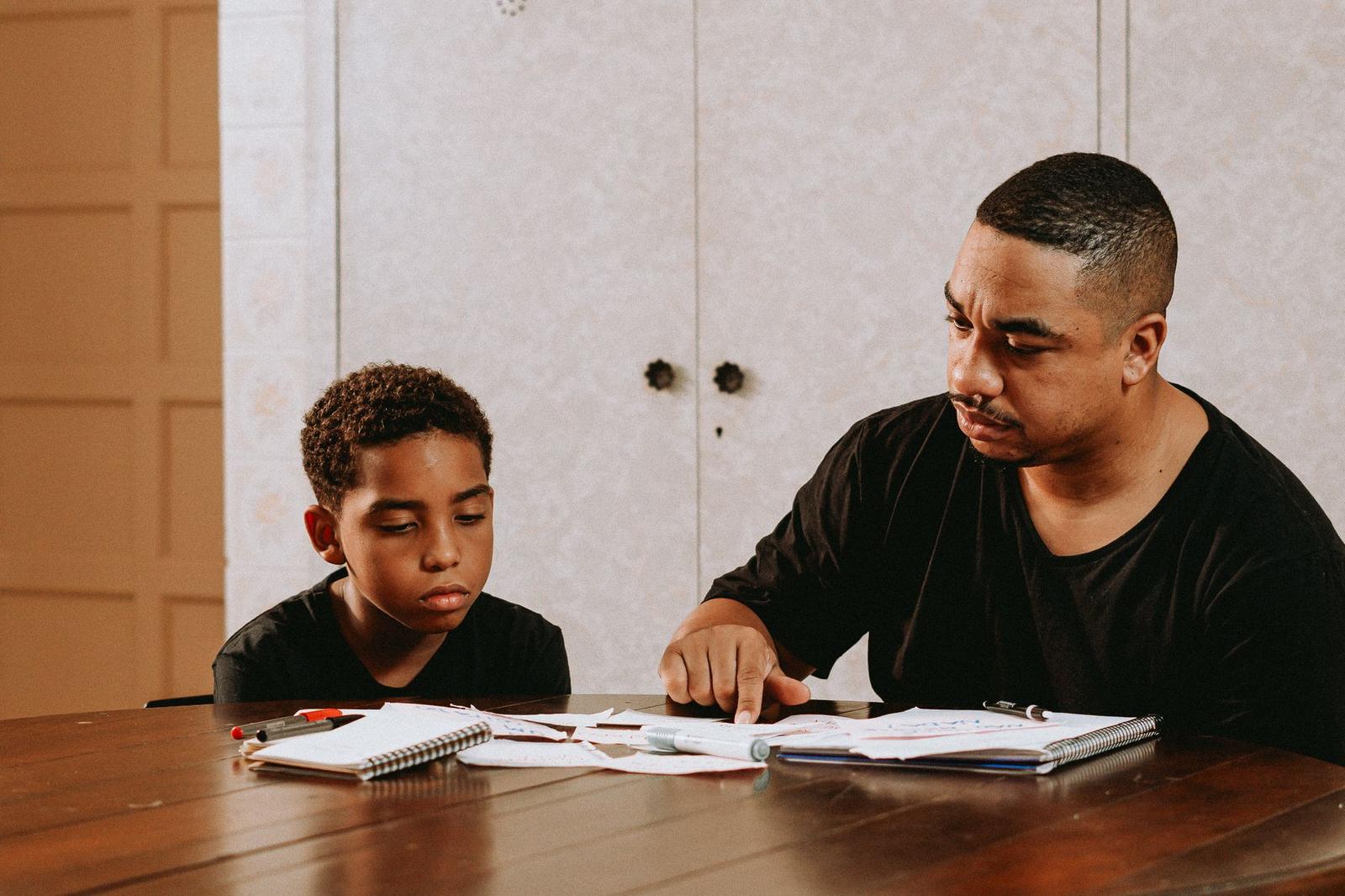
Give homework time a clear structure
Independence works best alongside structure. Strategies that support a child’s autonomy and also provide clear and consistent guidelines appear to be the most beneficial.
Many parents create “school-like routines”, which means making rules about when, where or how homework is done. A simple way to set that up:
- Agree with your child where and when homework happens.
- Keep those rules the same from day to day.
- Check that the work has been completed, as most parents in the 2014 study said they did.
- Within those rules, let your child lead the work itself.
Notice that the rules cover the setting, not the answers. That split is what keeps you supportive rather than controlling.
How your help should change as your child grows
Age and ability change how much help parents give. Parents reported spending more time helping elementary-age children than secondary school-age children, and parents of low-ability students reported spending more time than parents of high-ability students.
The older years carry a risk. Parents of secondary students often monitored less faithfully, partly because secondary teachers did not expect or ask them to. As a result, low-ability students in middle and high school were less likely to complete homework or achieve academically.
Parents of older students also often felt increasingly less able to help. You do not need to master the subject to stay involved: ask your child to explain the task, keep the routine going and check that the work gets done.
When the homework itself is the problem
Not every assignment invites useful help. Homework that asks students to memorize facts, with the parent expected to teach school skills, gives less meaningful chances for parent and child to interact.
Projects that need in-depth investigation, thought and some creative license enable meaningful parent participation. The article lists several ways families can take part:
- Letting the child demonstrate math skills to you
- Sharing ideas and getting reactions to written work
- Conducting surveys or interviews
- Gathering family memories and experiences
- Applying school skills to real life
The article also argues that teachers should explain the purpose of each assignment, including what skill it practises and why it matters. If that is unclear to you or your child, it helps to know how to talk to your child’s teacher about it.
It also says students should have a choice in how they carry out an assignment. When your child sees a reason for the work and has some say, they are more likely to engage, and you can read more on how to motivate a child to learn.
Frequently asked questions
Does helping with homework always improve results?
Show answer
No. The research summarised by The Conversation found that parent involvement can have both positive and negative effects, depending on the assignment, the strategy, the child’s age and ability, and the resources at home.
Should I fix my child’s mistakes?
Show answer
It is better to leave the corrections to your child. A safer role is to check that the work is done and talk it through, so any fixing stays in their hands.
What if I don’t understand the subject?
Show answer
Parents of older students often report feeling less able to help. You can still provide structure, ask your child to explain their thinking and raise questions with the teacher.
Should I step in if my child hasn’t asked?
Show answer
Be careful. In one study, students reported that help without a request, or help that felt intrusive or controlling, had a detrimental effect. Offering help and letting your child decide is the gentler approach.