If you’re wondering how to build teacher-student relationships, start by talking with your students often and giving more guidance and praise than criticism. Research links that trust to better engagement and learning.
For more ideas across the classroom, browse our teaching tips.
| Item | Value |
|---|---|
| Studies in the Review of Educational Research analysis | 46 studies |
| Outcomes that improved when relationships were strong | Academic engagement, attendance, grades, disciplinary actions and school dropout rates |
| Students featured in the excerpt video | 4 students, 10th to 12th graders |
| Source of the teacher-relationship quotation | American Psychological Association |
| Date of the source page | November 23, 2020 |
These figures come from a page by the Trauma and Learning Policy Initiative on the Massachusetts Advocates for Children website. Figures and findings can change, so check the source before you rely on them.
Why do teacher-student relationships matter?
The Trauma and Learning Policy Initiative argues that the positive influence of trusting relationships on student learning “cannot be overstated”. Its page, dated November 23, 2020, says this holds whether learning is in-person, remote or hybrid. The page is on the Massachusetts Advocates for Children site.
It quotes the American Psychological Association: teachers who foster positive relationships with their students create classroom environments that are more conducive to learning. Those environments also meet students’ developmental, emotional and academic needs.
What do strong relationships change for students?
An analysis by the Review of Educational Research of 46 studies found improvements when teacher-student relationships are strong. The areas were academic engagement, attendance, grades, disciplinary actions and school dropout rates, as reported on the source page.
The page also describes a student who feels a strong personal connection to their teacher. That student talks with the teacher frequently and receives more constructive guidance and praise than criticism. According to the American Psychological Association, as quoted there, this student is likely to trust the teacher more, show more engagement in learning, behave better in class and achieve at higher levels academically.
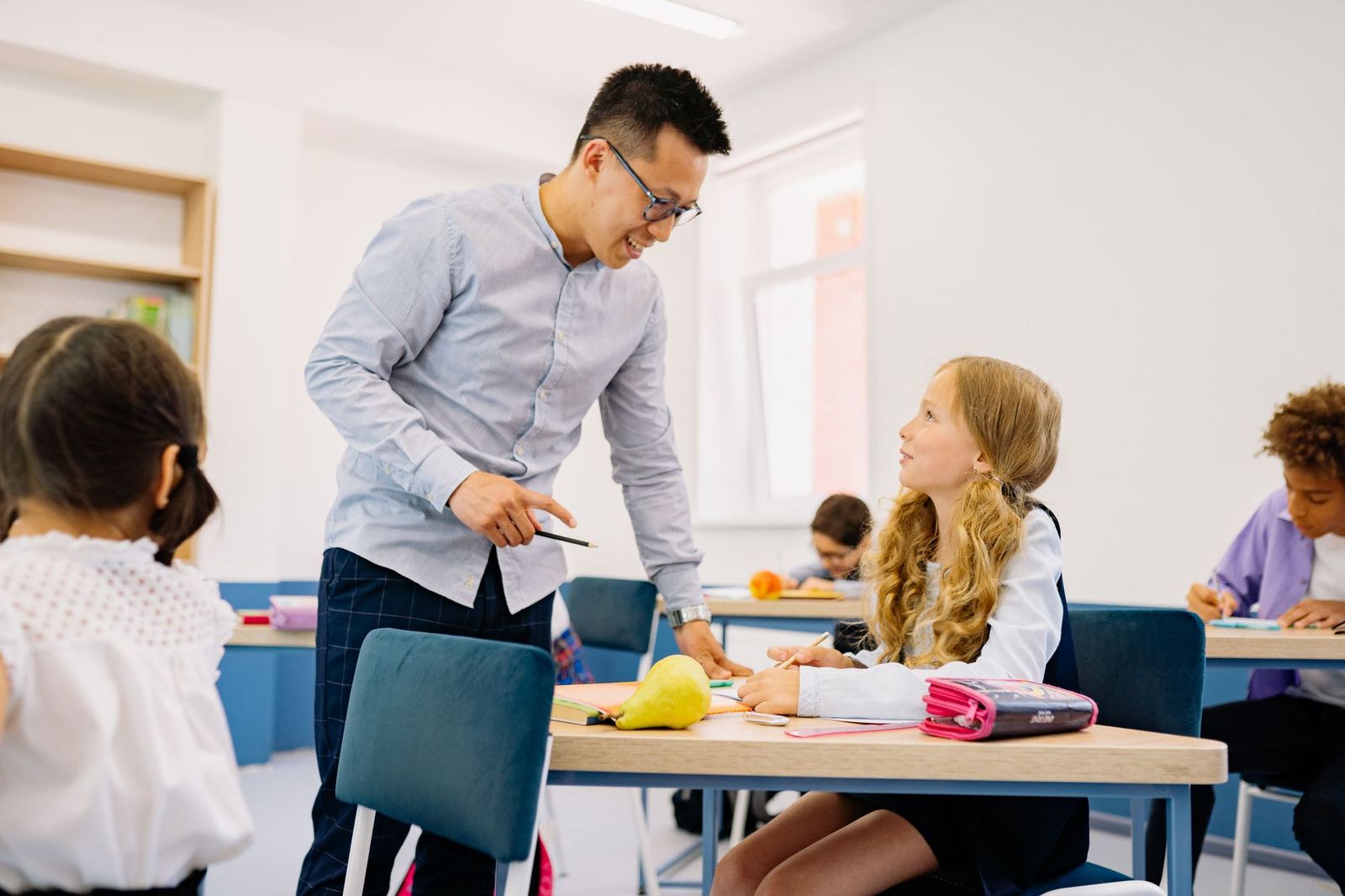
Everyday ways to build trust with your students
The source does not give a step-by-step programme. It does describe what a strong connection looks like, and you can turn those descriptions into habits:
- Talk often. Frequent conversation is part of the pattern the source describes in strong relationships.
- Balance your feedback. Offer constructive guidance and praise, not just criticism.
- Make it personal. A strong personal connection is the starting point of the pattern described.
- Be easy to be around. One 10th grader in the source says he answers questions more readily because he feels comfortable around his teachers.
Treat these as starting points drawn from the source, not a guaranteed formula. Your own students and context will shape what works.
What students say about trusted teachers
The page highlights an excerpt video with four students at the Salem Academy Charter School, a trauma-sensitive demonstration school. Their comments show how trust can feel from the student side:
- Eddie, a 10th grader, feels more comfortable answering questions in class because he feels comfortable around his teachers.
- Destiny, a 12th grader, has faith in the resources and support available at her school because of the faith she has in her teachers.
- Lola, a 10th grader, is better able to hear and respect what she is being taught because of the respect she has for her teachers.
- Juliebeth, an 11th grader, credits extracurricular activities with helping her build stronger bonds with other students and the school in general.
The school’s Dean of Students, Ms. Onembo, sums it up: “Students do better if they’re connected to a community. They also do better when they have relationships with people in the building.”
Supporting relationships beyond one-to-one talk
Trust is not built only in private conversations. Juliebeth’s example suggests that clubs and activities can widen a student’s sense of connection, so it can be worth pointing students toward them.
The source also says trauma-sensitive schools recognise that educators need support and planning time to build caring, collaborative relationships with each other. That, in turn, lets them prioritise relationships with students and help them feel welcomed and safe.
Relationships work alongside structure. Clear classroom routines and procedures give your day a predictable shape, and it is worth reading about them next to this topic. If behaviour is on your mind, our guide to classroom management strategies covers the other side of the picture.
Staying connected when learning is not in person
The source notes that remote or hybrid learning put consistent student attendance at risk in many districts when it was written. It urges school systems to keep students connected and to maintain environments, in person or remote, that strengthen relationships, trust and respect between teachers and students.
For you, that means the same habits apply on screen: reach out, keep conversations going, and make sure praise and guidance reach students who are not in the room.
Frequently asked questions
What is the first thing I can do to build trust with a student?
Show answer
Start by talking with them regularly. The source describes strong relationships as including frequent conversation, plus constructive guidance and praise rather than only criticism.
Do these ideas work in remote or hybrid classes?
Show answer
The source says the relationship between students and teachers is critical whether learning is in-person, remote, hybrid or in continual flux. It urges staying connected to students in every format.
Is there evidence that relationships affect results?
Show answer
An analysis of 46 studies, reported by the Trauma and Learning Policy Initiative page, found improvements in engagement, attendance, grades, disciplinary actions and dropout rates when relationships were strong. The page is dated November 23, 2020, so check for newer research.
Do students need to be close to every teacher?
Show answer
The source does not say so. It focuses on trust, comfort, respect and a sense of connection, and students in its video link those feelings to answering questions, listening and feeling supported.